
Every day, our body needs different nutrients to stay healthy, produce energy, grow, and perform its normal functions. These nutrients are generally divided into two main groups: macronutrients and micronutrients.
Macronutrients are nutrients that the body needs in larger amounts, while micronutrients are needed in smaller amounts. Both are important for maintaining a healthy and balanced diet. Understanding the difference between these two groups can help us better understand what our body needs from the foods we eat.
What Are Macronutrients?
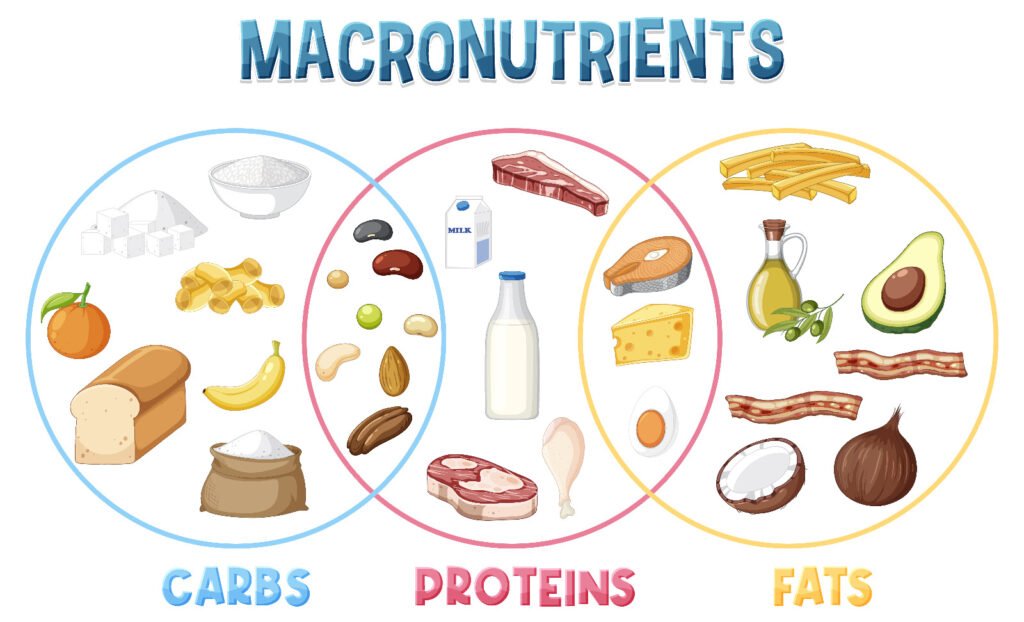
Macronutrients are nutrients that our body needs in relatively large amounts. They provide energy and also support important functions such as growth, repair, and maintaining body tissues.
There are three main macronutrients:
- Carbohydrates
- Proteins
- Fats
1. Carbohydrates
Carbohydrates are one of the body’s main sources of energy. They are found in foods such as:
- Rice
- Bread
- Fruits
- Potatoes
- Oats
- Whole grains
Choosing nutrient-rich carbohydrate sources, especially whole grains, fruits and vegetables, can also provide fiber and other beneficial nutrients.
2. Protein
Protein is important for building and repairing tissues. It also helps support muscles and many processes in the body.
Good sources of protein include:
- Eggs
- Chicken
- Fish
- Milk and yogurt
- Beans and lentils
- Nuts and seeds
3. Fats
Fats are also an important source of energy. They help the body absorb certain vitamins and support normal cell functions.
Healthy sources of fats include:
- Avocados
- Nuts
- Seeds
- Olive oil
- Fatty fish
What Are Micronutrients?
Micronutrients are vitamins and minerals that the body needs in much smaller amounts compared with macronutrients. However, small amounts do not mean they are unimportant.
Micronutrients support many essential processes, including immunity, bone health, energy metabolism and normal cell function.
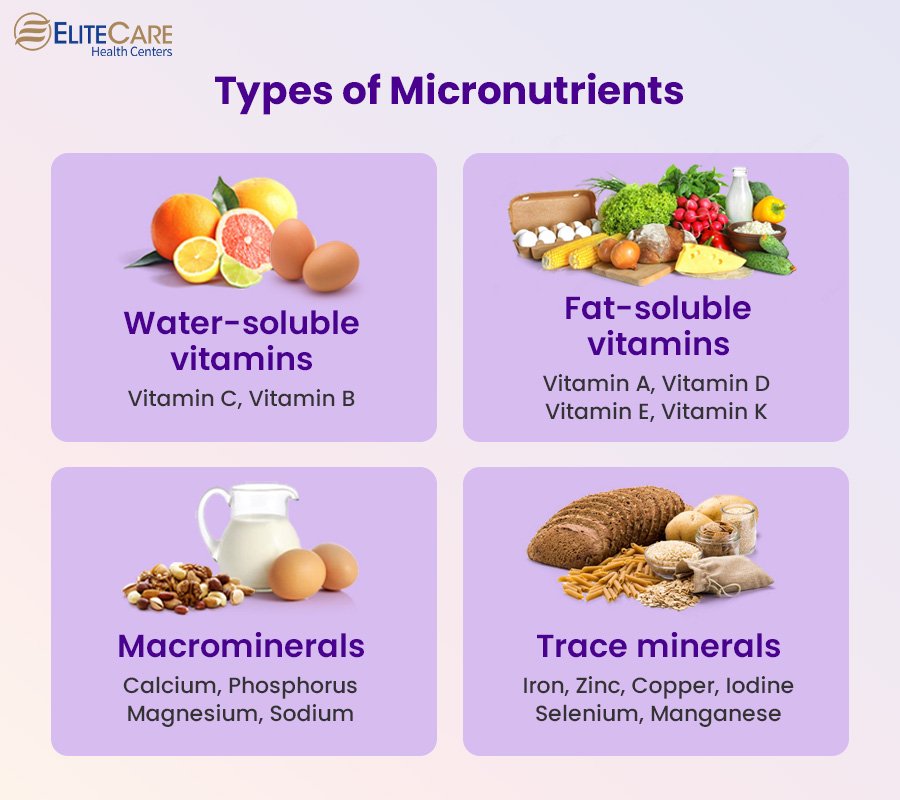
They are mainly divided into two groups:
Vitamins
Vitamins are organic compounds that help the body perform various functions.
Examples include:
-
Vitamin A – supports vision and immune function
-
Vitamin C – supports the immune system and collagen formation
-
Vitamin D – helps with calcium absorption and bone health
-
Vitamin B vitamins – help the body use nutrients for energy and support normal cell functions
Minerals
Minerals are naturally occurring elements needed for different body functions.
Examples include:
-
Calcium – important for bones and teeth
-
Iron – needed to make hemoglobin
-
Zinc – supports immune function and wound healing
-
Magnesium – involved in many processes, including muscle and nerve function
-
Potassium – helps support normal muscle and nerve function
Macronutrients vs Micronutrients
The main difference is the amount your body needs, not their importance.
| Macronutrients Micronutrients | |
| Needed in larger amounts | Needed in smaller amounts |
| Include carbohydrates, protein and fats | Include vitamins and minerals |
| Provide energy, especially carbohydrates, protein and fats | Mainly help regulate body processes |
| Needed in relatively large quantities | Needed in relatively small quantities |
Why Do We Need Both?
A healthy diet isn’t about choosing macronutrients over micronutrients. Your body needs both.
Macronutrients provide energy and materials for growth and repair, while micronutrients help regulate numerous processes that keep the body functioning normally.
For example, a meal containing whole-grain rice, chicken, vegetables and yogurt can provide a combination of carbohydrates, protein, fats, vitamins and minerals.
How Can You Get Enough Nutrients?
The easiest way to support adequate nutrient intake is to eat a variety of nutrient-dense foods.
Try including:
-
Fruits and vegetables
-
Whole grains
-
Eggs, fish, meat or other protein sources
-
Milk, yogurt or suitable alternatives
-
Nuts and seeds
-
Healthy sources of fats
Eating a variety of foods can help you get different nutrients instead of relying on a small number of foods.
Final Thoughts
Macronutrients and micronutrients are both essential for good health. Macronutrients are needed in larger amounts and include carbohydrates, proteins and fats. Micronutrients are needed in smaller amounts and include vitamins and minerals.
Rather than focusing on just one group, aim for a balanced diet that provides a variety of nutrient-rich foods. A balanced approach can help your body get the nutrients it needs for energy, growth, repair and everyday functions.