
Protein-Rich Foods
Protein is found in both animal-based and plant-based foods. Here are some nutritious options:
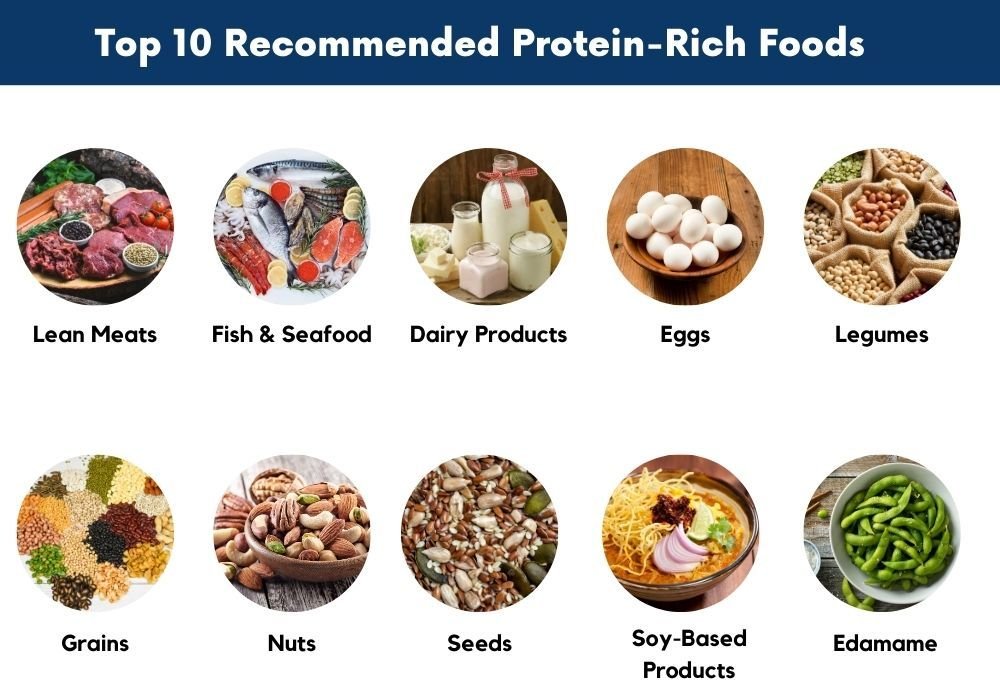
1. Eggs
Eggs are an affordable and versatile source of high-quality protein. They can be included in breakfast, lunch, or dinner and also provide several important vitamins and minerals.
2. Chicken and Other Lean Meats
Chicken, turkey, and other lean meats provide protein along with nutrients such as iron, zinc, and vitamin B12. Choosing lean cuts and healthier cooking methods can make them part of a balanced diet.
3. Fish
Fish is a good source of protein. Fatty fish such as salmon, sardines, and mackerel also provide omega-3 fatty acids, which are important for overall health.
4. Milk and Yogurt
Milk and yogurt provide protein as well as calcium. Greek yogurt can be particularly protein-rich and makes a convenient snack or breakfast option.
5. Lentils and Beans
Lentils, chickpeas, kidney beans, black beans, and other legumes are excellent plant-based sources of protein. They also provide fiber, making them a nutritious addition to meals.
6. Nuts and Seeds
Almonds, peanuts, pumpkin seeds, chia seeds, and other nuts and seeds contain protein along with healthy fats and other nutrients.
Because nuts and seeds are relatively high in calories, moderate portions are generally appropriate.
7. Tofu and Soy Foods
Tofu, soybeans, and other soy-based foods can provide high-quality plant protein. They are useful options for people who prefer vegetarian or plant-based meals.
8. Cottage Cheese
Cottage cheese is a protein-rich dairy food that can be eaten on its own or added to meals and snacks. It also provides calcium.
Benefits of Protein
Supports Muscle Health
Protein provides amino acids needed to build and maintain muscles. Getting enough protein is particularly important when combined with regular physical activity.
Helps Repair Body Tissues
The body continuously repairs and replaces cells and tissues. Protein provides the building blocks needed for these processes.
Supports Healthy Bones
Protein contributes to the structure and maintenance of bones. A balanced diet that includes adequate protein, calcium, vitamin D, and other nutrients supports overall bone health.
May Help You Feel Full
Protein can help increase feelings of fullness after meals. Including protein-rich foods as part of balanced meals may help you stay satisfied between meals.
Supports Enzymes and Hormones
The body uses protein to make many enzymes and hormones that are involved in important processes such as digestion, metabolism, and regulation of body functions.
Provides Important Nutrients
Many protein-rich foods also provide other nutrients. For example, fish can provide omega-3 fats, dairy products provide calcium, and legumes provide fiber, vitamins, and minerals.
Animal vs. Plant Protein
Both animal and plant foods can contribute to a healthy diet.
Animal sources such as eggs, fish, chicken, milk, and yogurt are generally rich in essential amino acids. Plant sources such as lentils, beans, chickpeas, nuts, seeds, and soy foods can also provide protein and offer additional nutrients such as fiber.
Eating a variety of protein sources throughout the day can help you get a wide range of nutrients.
How to Add More Protein to Your Diet
Adding protein to meals does not have to be complicated. You can try:
- Adding eggs or yogurt to breakfast
- Including lentils, beans, or chickpeas with lunch or dinner
- Choosing chicken or fish as a protein source
- Adding nuts or seeds to yogurt or oatmeal
- Having milk or yogurt as a snack
- Adding beans or lentils to soups and salads
- Choosing tofu or other soy foods for plant-based meals
Is More Protein Always Better?
Protein is important, but more is not necessarily better. Your protein needs depend on factors such as age, body size, activity level, and overall health.
Instead of focusing only on increasing protein, aim for a balanced diet that includes protein along with vegetables, fruits, whole grains, and healthy sources of fats.
Conclusion
Protein is an essential part of a healthy and balanced diet. Foods such as eggs, fish, chicken, dairy products, lentils, beans, nuts, seeds, and soy foods can provide protein along with other important nutrients.
Choosing a variety of protein-rich foods and including them in balanced meals can help support muscle health, tissue repair, fullness, and many essential functions in the body.
A healthy diet is not about eating one particular food—it is about creating a balanced pattern of nutritious foods that meets your body’s needs.