

Broccoli is a green vegetable that belongs to the cruciferous vegetable family, along with cauliflower, cabbage, kale, and Brussels sprouts. It is widely included in healthy eating patterns because it provides several important vitamins, minerals, fiber, and plant compounds.
Although broccoli is a simple vegetable, its nutritional composition has made it an interesting subject of nutrition research.
What Is Broccoli?
Broccoli (Brassica oleracea var. italica) is a vegetable known for its green florets and thick stalk. Both the florets and stalk can be eaten when properly prepared.
It can be eaten raw or cooked and is commonly added to salads, soups, stir-fries, pasta, and other meals.
Nutrients Found in Broccoli
Broccoli is relatively low in calories while providing several useful nutrients. It is particularly known as a source of:
- Vitamin C
- Vitamin K
- Folate
- Dietary fiber
- Potassium
- Other vitamins and minerals
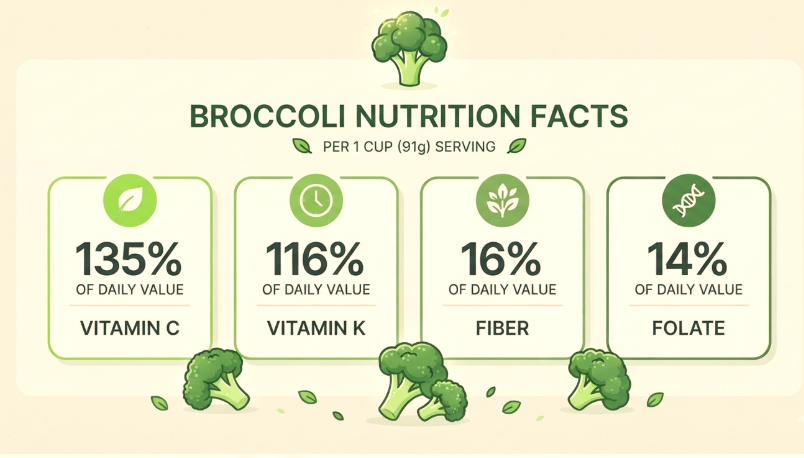
For example, the U.S. National Institutes of Health lists broccoli among good food sources of vitamin C. Half a cup of cooked broccoli provides about 51 mg of vitamin C, while half a cup of raw broccoli provides about 39 mg.
Broccoli is also a notable source of vitamin K. According to the NIH, half a cup of chopped, boiled broccoli provides about 110 micrograms of vitamin K.
Broccoli and Vitamin C
One of the interesting nutritional features of broccoli is its vitamin C content.
Vitamin C is an essential nutrient that acts as an antioxidant and is involved in several normal functions in the body. It also plays a role in collagen production, wound healing, and absorption of iron from plant foods.
Broccoli can therefore contribute to daily vitamin C intake as part of a varied diet.
However, cooking can reduce vitamin C because it is sensitive to heat. The NIH notes that steaming or microwaving may result in less vitamin C loss than some other cooking methods.
Broccoli Provides Vitamin K
Broccoli is also a useful source of vitamin K.
Vitamin K is important for normal blood clotting and bone-related functions. Green vegetables, including broccoli, are among its food sources.
Because broccoli contains vitamin K, people taking certain blood-thinning medications should follow their healthcare professional’s advice about maintaining a consistent vitamin K intake rather than suddenly making major changes to their diet.
Broccoli Contains Fiber
Broccoli also contributes dietary fiber to the diet.
Fiber is an important part of a healthy eating pattern. It can support normal digestive function and can help make meals more filling.
Adding vegetables such as broccoli to meals is one simple way to increase overall vegetable and fiber intake.

What Makes Broccoli Interesting in Nutrition Research?
Broccoli belongs to the cruciferous vegetable family, which contains naturally occurring compounds called glucosinolates.
When broccoli is cut, chopped, or chewed, glucosinolates can come into contact with the enzyme myrosinase, leading to the formation of compounds called isothiocyanates. One of the most studied is sulforaphane, which is derived from glucoraphanin.
This is one reason broccoli has received considerable attention in nutrition research.
Broccoli and Sulforaphane
Sulforaphane is one of the compounds most frequently discussed when researchers study broccoli.
Laboratory and experimental research has investigated sulforaphane for its effects on cellular defense mechanisms and oxidative stress. Human studies have also been conducted, but the evidence is still developing.
A review of human intervention studies found some promising results, but also concluded that the evidence was limited and that more research is needed.
This is important because it is easy to see claims online suggesting that broccoli or sulforaphane can prevent or cure diseases. Current research does not justify presenting broccoli as a treatment for a disease.
Instead, it is more accurate to consider broccoli as one nutritious vegetable that can contribute to an overall healthy diet.
Does Cooking Change Broccoli?
Yes. Cooking can affect some nutrients and plant compounds in broccoli.
For example, vitamin C can decrease with cooking because it is sensitive to heat.
Cooking can also affect glucosinolates and the enzymes involved in their conversion into other compounds. Research has therefore looked at different preparation methods and how they influence broccoli’s bioactive compounds.
For everyday eating, methods such as steaming, lightly cooking, or quickly stir-frying can be practical ways to prepare broccoli while avoiding prolonged cooking.

Simple Ways to Add Broccoli to Your Diet
You don’t need complicated recipes to include broccoli in your meals.
You can:
- Add steamed broccoli to lunch or dinner.
- Mix it into a vegetable stir-fry.
- Add chopped broccoli to omelets.
- Include it in soups.
- Add raw broccoli to salads.
- Combine it with chicken, beans, lentils, or other protein-rich foods.
- Serve it with rice or whole-grain foods.
The goal is not to eat broccoli alone, but to include it as part of a varied and balanced diet.
Is Broccoli a Superfood?
The word “superfood” is commonly used online, but it is not a scientific category.
Broccoli does provide several valuable nutrients and bioactive plant compounds, but no single food can provide everything the body needs.
A healthier approach is to include a variety of vegetables, fruits, whole grains, legumes, nuts, seeds, and appropriate protein sources in the overall diet.
Final Thoughts
Broccoli is a nutrient-rich cruciferous vegetable that can be a useful addition to a balanced diet. It provides vitamin C, vitamin K, folate, fiber, and other nutrients, while also containing naturally occurring compounds such as glucosinolates.
Research on broccoli’s bioactive compounds, particularly sulforaphane, is ongoing. While some findings are promising, more human research is needed before strong health claims can be made.
Rather than thinking of broccoli as a “miracle food,” it is better to view it as one nutritious food among many that can contribute to a healthy eating pattern.
A simple takeaway:
Add variety to your plate, eat plenty of vegetables, and let foods like broccoli be part of the bigger picture.